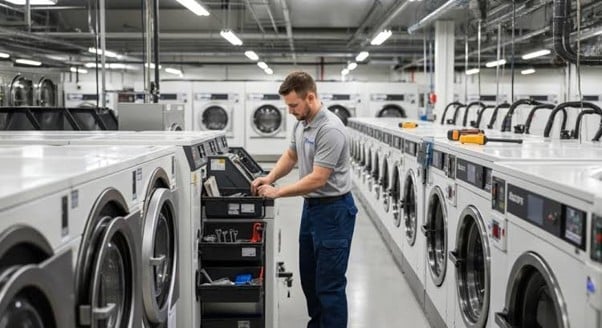

Unusual noises from commercial washers and dryers can be an early warning sign of an equipment problem. For laundromats, hotels, apartment complexes, and other businesses that depend on commercial laundry equipment, identifying the source of the noise can help reduce downtime and prevent further damage.
Professional Speed Queen appliance repair service involves more than listening to a squeak, bang, or grinding sound. Technicians need to understand when the noise occurs, evaluate how the machine operates, and inspect the components that may be contributing to the problem. A sound can have several possible causes, so replacing parts without proper testing may not resolve the issue.
By examining the symptoms and testing the relevant systems, technicians can make better-informed repair decisions and help businesses keep their laundry operations running efficiently.
Why the Timing of an Unusual Noise Matters
The stage of a wash or drying cycle when a noise occurs can provide valuable diagnostic information. A washer that bangs during the spin cycle may have a different issue from one that rattles while filling. Similarly, a dryer that begins squealing when the drum starts turning may need an inspection of its moving components.
Technicians may ask questions such as:
- Does the noise occur when the machine starts, runs, or stops?
- Does it happen during every cycle or only with certain loads?
- Is the sound constant, intermittent, or becoming louder?
- Does the machine shake, vibrate, or operate more slowly than usual?
- Did the noise begin suddenly or develop gradually?
These details help narrow down potential causes and determine which components require further inspection. They also help distinguish an isolated operating issue from a problem that may need professional repair.
What Different Sounds Can Reveal About Speed Queen Equipment
The type of noise can offer useful clues, but it does not confirm a specific fault by itself. The machine’s model, operating conditions, and inspection results all matter.
1. Banging or Heavy Thumping
A loud banging noise from a commercial washer may be caused by an unbalanced load, incorrect leveling, or a problem involving the suspension or drum support. In a dryer, loose items or an issue with a drum-related component may produce similar sounds.
If the banging continues with normal loads or becomes more severe, arrange an inspection rather than repeatedly running the machine.
2. Squealing or High-Pitched Whining
Squealing from a dryer may be associated with a worn belt, a roller, a bearing, or another moving component. In other situations, the noise may originate from a different part of the machine.
The sound’s timing and consistency can help a technician decide what to examine. Replacing a belt or another part without confirming the cause may leave the original problem unresolved.
3. Grinding or Scraping
Grinding and scraping sounds can indicate friction, worn components, or parts that are not moving correctly. Because continued operation may worsen certain mechanical problems, a new or severe grinding sound should not be ignored.
Stop using the machine if the noise is severe, worsening, or accompanied by unusual heat, smoke, or another safety concern. Have the equipment assessed before returning it to normal operation.
4. Rattling or Clicking
Rattling may come from loose items, fasteners, or components that have become worn or displaced. Clicking can also occur for different reasons depending on the machine and the stage of its cycle.
Staff should note where the sound appears to originate without removing covers or reaching inside the equipment. A technician can then inspect the relevant areas safely.
5. Excessive Vibration or Humming
A washer that vibrates excessively may be unevenly positioned, overloaded, or experiencing a mechanical issue. An unusual hum may be associated with a motor, pump, or another operating component, depending on the equipment.
If checking the load and machine position does not resolve the vibration, or if the humming is new and persistent, further inspection may be necessary.
How Technicians Diagnose Unusual Equipment Noises
Reliable Speed Queen commercial washer and dryer repair begins with a systematic assessment rather than a guess based on sound alone. The diagnostic process varies by model and symptom, but it may include the following steps.
Step 1: Review the Reported Symptoms
The technician gathers information about the sound, when it occurs, and whether other operating changes have appeared. Previous breakdowns and repair history can also help establish whether the problem is recurring.
Step 2: Inspect the Machine and Its Installation
The technician checks relevant external and mechanical areas for visible damage, loose components, signs of wear, or installation-related issues. Depending on the reported symptoms, the machine’s position and leveling may also need attention.
Step 3: Examine Relevant Components
Based on the equipment type and initial findings, the technician may inspect the drum, belt, rollers, bearings, suspension, motor, pump, or other related components. Not every part needs to be examined or replaced in every repair; the inspection should be guided by the evidence.
Step 4: Perform Appropriate Diagnostic Tests
Where necessary, the technician performs suitable tests to narrow down the source of the noise. Any operational testing should follow the manufacturer’s procedures and appropriate safety precautions.
Step 5: Explain the Findings and Recommended Repair
Once the cause has been identified—or the next diagnostic step has been established—the technician should explain the findings, recommended work, and expected costs before proceeding with additional repairs.
Step 6: Check the Equipment After Repair
After the repair, appropriate checks help determine whether the original noise has stopped and the equipment is operating as expected. If the symptom remains, further investigation may be required.
This structured approach helps businesses avoid unnecessary part replacements and understand why a particular repair is being recommended.
What Commercial Laundry Staff Should Tell a Technician
Laundry employees often notice small changes before a machine experiences a complete breakdown. Sharing those observations can help technicians investigate the problem more efficiently.
Before arranging Speed Queen commercial dryer repair, prepare the following details:
- Machine identification: Provide the model number and serial number, if available.
- Description of the sound: Explain whether it is banging, squealing, grinding, rattling, or humming.
- When it occurs: Note whether it happens during startup, tumbling, spinning, draining, or another stage.
- Changes in performance: Mention excessive vibration, longer cycle times, incomplete cycles, or unusual results.
- Fault history: Explain when the noise began and whether the machine has experienced similar issues before.
- Previous repairs: Share details of recent service visits or replaced components, if known.
For example, reporting that a dryer begins squealing shortly after the drum starts turning provides more useful information than simply saying the machine is noisy.
Staff should not open electrical panels, remove safety covers, reach into moving equipment, or attempt repairs that require specialist training. If the equipment produces smoke, sparks, or a burning smell, stop using it if safe to do so and follow the appropriate safety procedures before arranging professional service.
Why Replacing Parts Without Testing Can Increase Costs
Replacing a component based only on the sound may seem like a quick solution, but it can create additional expense if the actual cause lies elsewhere.
For example, if a dryer continues to make noise because a related component is worn or misaligned, replacing only the suspected part may not address the underlying problem. The business could then face another service visit, additional labor costs, and further disruption to laundry operations.
A proper assessment helps establish which component requires attention and whether other factors may be contributing to the fault.
Before approving a repair, business owners and managers should ask:
- What evidence points to the recommended component as the source of the noise?
- Are any additional parts or adjustments needed?
- What are the estimated labor and replacement-part costs?
- Will the technician perform checks after the repair?
- What should staff monitor if the noise returns?
Clear answers help businesses make informed decisions while avoiding assumptions about the cause or outcome of a repair.
How to Reduce Disruptions From Commercial Laundry Equipment Problems
Not every mechanical failure can be prevented, but good operating practices can help businesses identify problems earlier and manage equipment more effectively.
Follow the manufacturer’s instructions. Use the equipment according to its operating guidelines and recommended maintenance schedule.
Load machines correctly. Follow the manufacturer’s load limits and loading instructions to help avoid problems associated with improper loads.
Keep the equipment properly positioned. Follow installation and leveling requirements, particularly when excessive vibration is noticed.
Report unusual sounds promptly. Do not ignore a new or recurring noise simply because the machine continues to operate.
Maintain a repair history. Record the dates of breakdowns, symptoms, service visits, and completed repairs. This information can help identify recurring patterns.
Arrange appropriate maintenance. Follow the recommended service schedule and seek professional advice when operating conditions change.
For laundromats, hotels, and other high-volume facilities, these measures can help staff respond consistently when equipment begins behaving differently.
How to Choose a Speed Queen Appliance Repair Service
When commercial laundry equipment develops an unusual noise, choosing a suitable repair provider can make the service process clearer and more manageable.
Before booking Speed Queen appliance repair service, consider the following:
- Relevant equipment experience: Ask whether the provider services your type of Speed Queen commercial washer or dryer.
- A diagnostic-first approach: Look for a provider that investigates the reported symptoms before recommending replacement parts.
- Transparent estimates: Request information about diagnostic fees, labor, replacement parts, and possible additional charges.
- Clear communication: Choose a provider that explains the findings and discusses the recommended repair before proceeding.
- Suitable service coverage: Confirm that the company serves your business location and handles the type of equipment you operate.
- Post-repair checks: Ask how the technician will assess the machine after the work is completed.
A provider that communicates clearly and follows an evidence-based diagnostic process can help businesses understand their options and plan the next steps.
Frequently Asked Questions
1. Why is my Speed Queen commercial dryer making a loud banging noise?
Possible causes include loose items, an uneven load, or a problem with a drum-related component. The cause depends on the model and operating conditions. If the banging continues or becomes severe, stop using the machine and arrange an assessment.
2. Should I keep using a commercial dryer that makes a grinding sound?
A new, severe, or worsening grinding sound should be taken seriously. Stop using the machine and arrange professional inspection, especially if the noise is accompanied by unusual heat, smoke, or a burning smell.
3. Can an uneven floor cause a Speed Queen washer to vibrate loudly?
Yes. An uneven surface or incorrect leveling can contribute to excessive vibration. If the vibration persists after the load and installation are checked according to the manufacturer’s instructions, a technician may need to inspect the equipment.
4. What information helps technicians diagnose unusual laundry equipment noises?
The machine’s model, the type of sound, when it occurs, changes in performance, and previous repair history can all help. Specific observations are more useful than a general report that the machine is noisy.
5. When should a business arrange Speed Queen commercial dryer repair?
Arrange service when a dryer develops a new or recurring noise, experiences persistent vibration, stops unexpectedly, or shows changes in performance. Stop using the machine if there are signs of a safety hazard.
6. Can routine maintenance prevent unusual equipment noises?
Appropriate maintenance can help identify wear and developing problems, but it cannot prevent every mechanical failure. Follow the manufacturer’s recommendations and arrange an inspection when new or persistent noises appear.
7. Is it better to repair or replace a noisy commercial washer or dryer?
The decision depends on the confirmed fault, the machine’s age and condition, repair costs, parts availability, and expected operating needs. Ask the technician to explain the repair options and estimated costs so you can compare them with the cost of replacement.
Arrange Service for Commercial Laundry Equipment
Unusual noises from commercial washers and dryers should not be ignored, but they should not lead to guesswork either. Identifying the source of the sound can help businesses understand the required repair, avoid unnecessary part replacements, and make informed decisions about their equipment.
Bay Master Appliances provides commercial appliance service for businesses experiencing equipment problems. If your Speed Queen washer or dryer is making unusual noises, contact the team to discuss the symptoms, confirm service availability, and arrange an assessment.
Call (800) 300-2024 to discuss your commercial laundry equipment concerns and ask about the next steps for service.
Before authorizing repairs, ask about the diagnostic process, expected costs, and recommended work for your specific machine.